Springtime, art and grammar headaches: my 2026 so far living and translating in Athens

It’s almost summer here in Athens, so what better time for a little look back at what I’ve been up to this season! The arrival of 2026 was shrouded in uncertainty, for me and for so many other translators, but ultimately I am happy to report a strong first half of the year and a couple of exciting projects that have been cooking away these past few months from my little desk here in Kipseli…

New artsy projects in full bloom
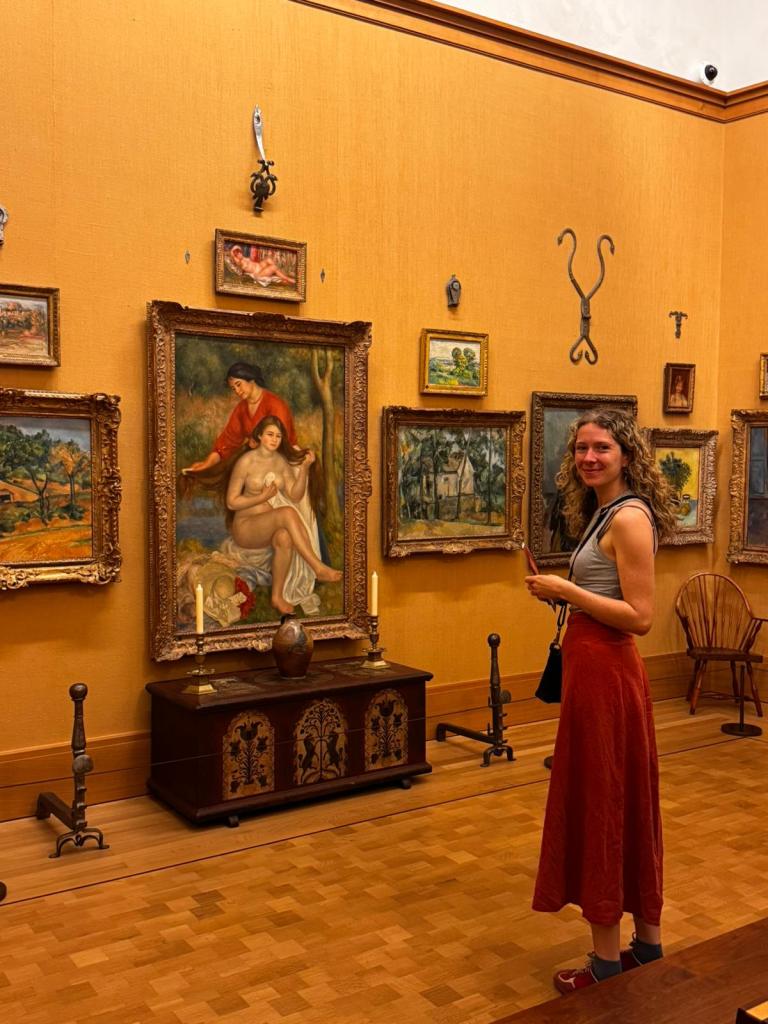
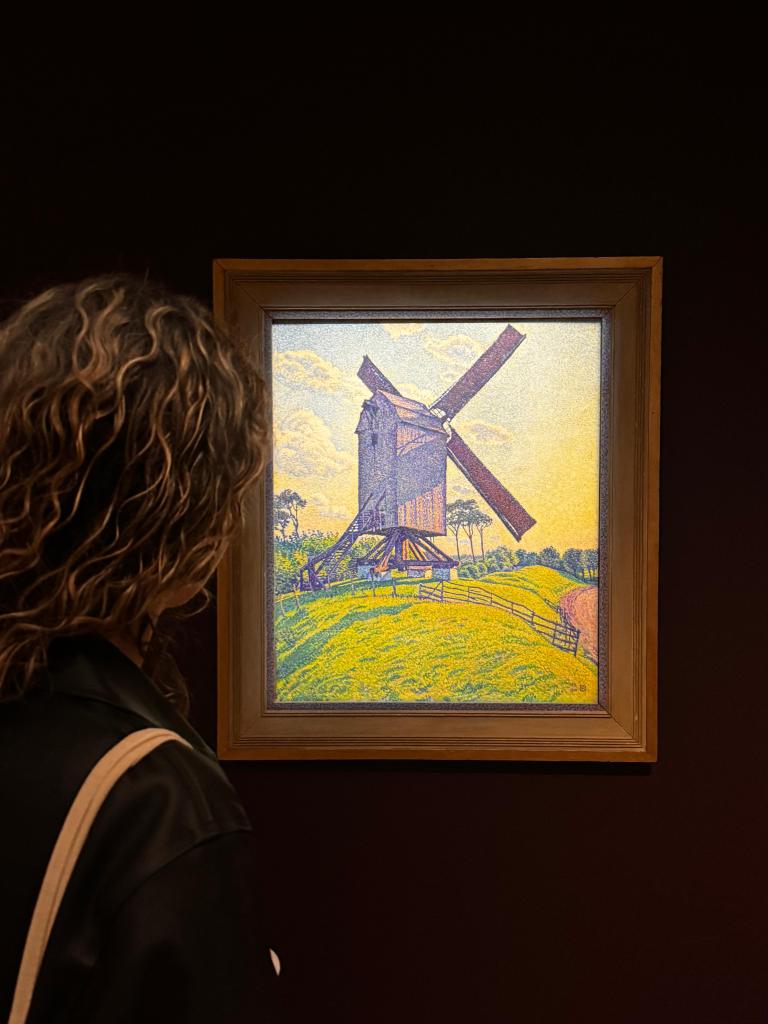
After the copywriting frenzy of last year was brought to an end by several in-house hires at Vans and icebreaker, I was excited to see what the new year would bring. In December of last year, I was delighted to start a collaboration with Impressionnismes, an online platform for research and insights into the history of impressionism, led by the art history department of Paris Nanterre University. The platform will be translated entirely into English, representing several months of work. Translating such a wealth of art history research allowed me to explore once again the terminology and principles encountered during my history of art degree, while the techniques and images further spurred my own artistic practice and learning process regarding tone and colour.
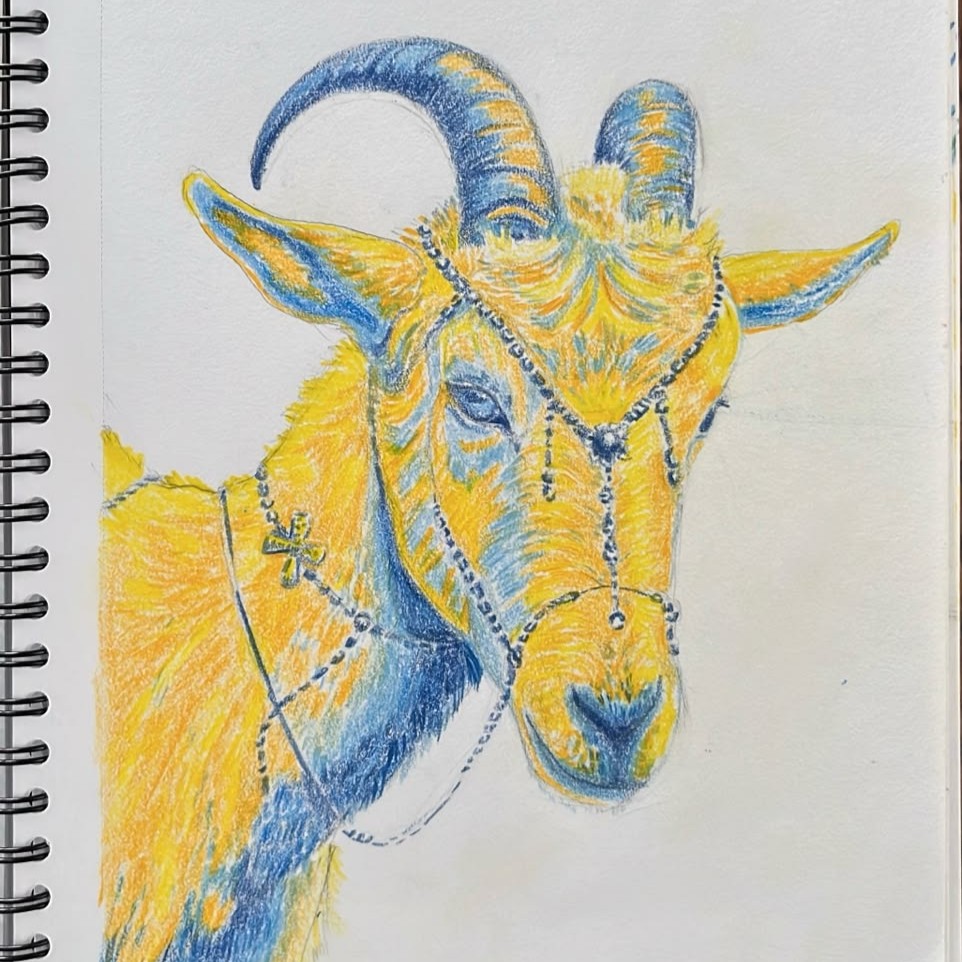
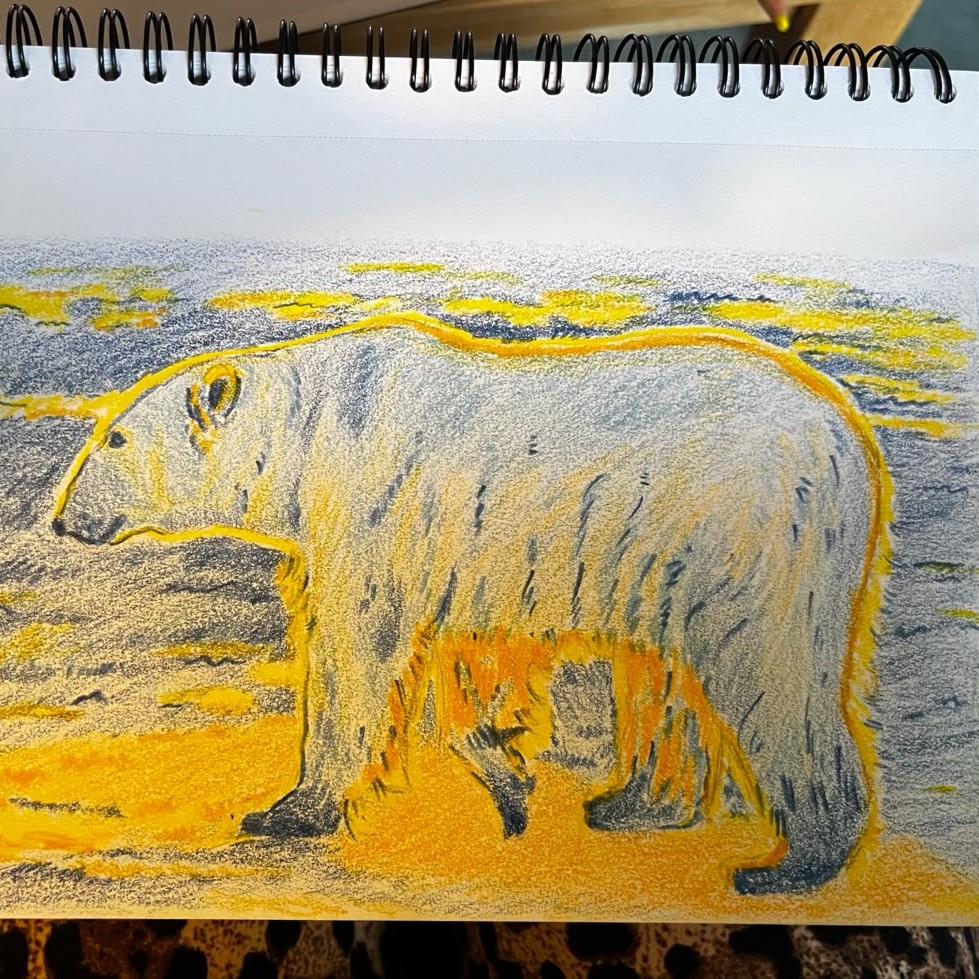
This project reminded me how important the translator’s eye is when handling this kind of task. From my first meeting with the client, I made it clear that I would not be using any AI in my translations, out of respect for the text and, on a more practical note, to not interrupt my own workflow. Underpinning my translations with my own research and close reading of the source allowed me to really dive into each artwork and each artist’s unique story, making sure my understanding was solid enough to do justice to each authors contribution.

In other exciting news, the start of the year brought a new collaboration with the publishing agency Elilocom. I was entrusted with my first few projects, the first being a fun and informative book soon to be published in English by DK providing screen-free ideas for kids’ games. Sometimes translating puzzles was a puzzle in itself, and crossing the cultural gap (how to translate “La Barbichette”, anyone?) was a bigger challenge than expected, demanding a certain amount of creativity and initiative. My favourite part of the project was, after the agency’s painstaking typesetting efforts, being able to see my translations appear among the lush illustrations of Hifumiyo, leading me to explore the artist’s catalogue more extensively – I’ll be taking notes for my own drawings!

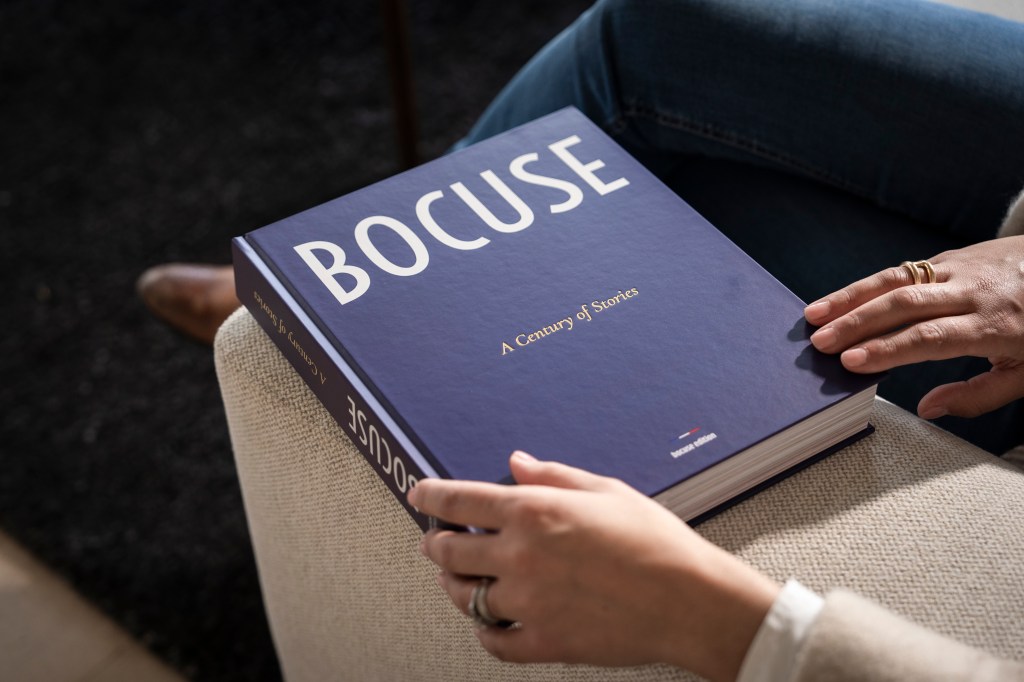
Projects such as these, or my previous recipe book translation for Bocuse Edition, remind me just how fun and rewarding translation can be, and any chance to work hand-in-hand with typesetters, graphic designers, writers and photographers is always very satisfying. That feeling of taking part in a “production” has always been a strong driver for me and is a welcome reprieve from the often solitary, text-heavy work of translation.
A new language learning adventure

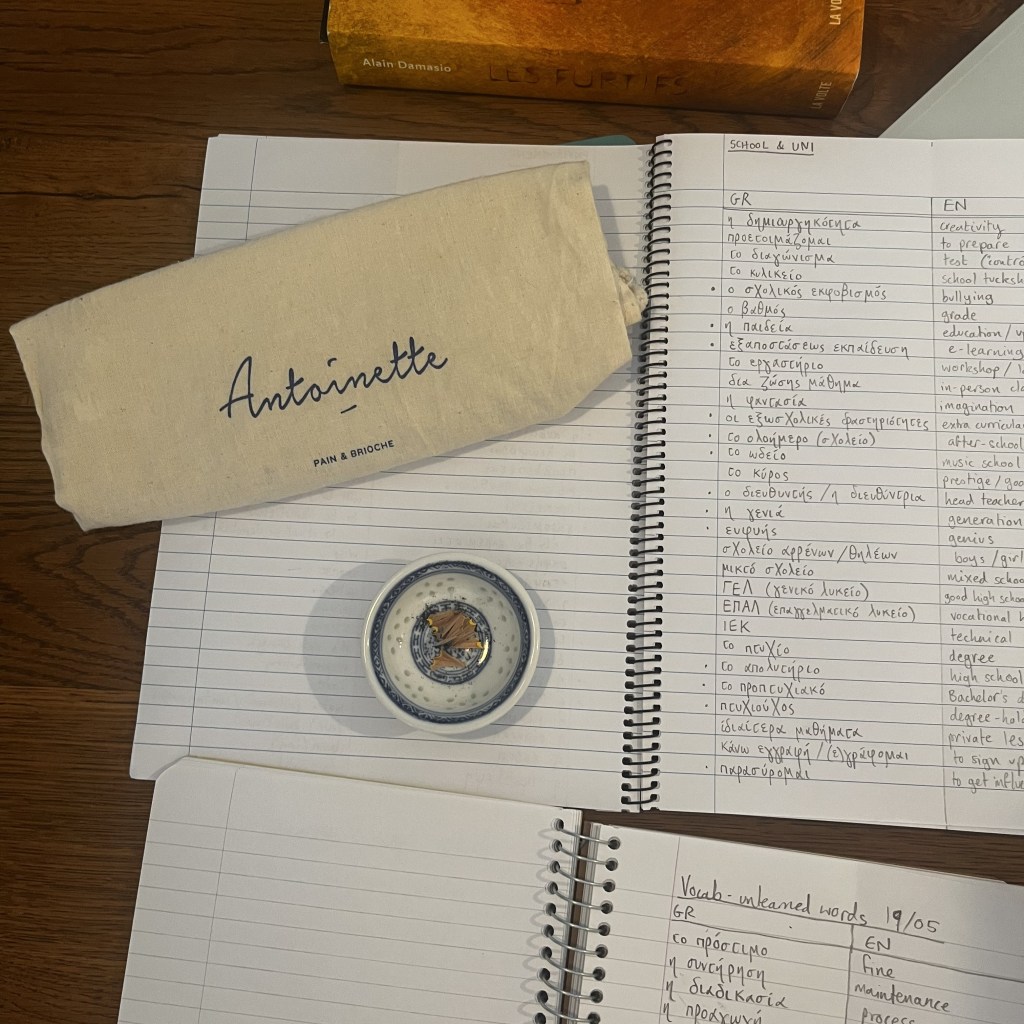
French has always been main focus throughout my career, and since university I have been an avid consumer of French music, literature and radio. Spanish developed as a natural extension of this, after my move to Spain in 2017 plunged me into Spanish and Valencian culture. Its similarities with French allowed me a decent amount of wiggle room for mistakes during the early stages. Now, Modern Greek is a different beast. From the mind-boggling cases to the three genders, its whole new perspective to using adverbs and a daunting passive voice, I am now confronted with the wall of grammar I ignored during my attempts at learning German back in 2016. The light at the end of the tunnel? Long conversations that go on late into the night over mezze, music from islands and mountains that tickles the ears and flows like water, a rich and diverse literary tradition waiting to be explored…

After starting my modern Greek classes in Lyon in a chilly traboule at La Maison des Passages, I am now continuing my classes at the Lexi Logos language school in Athens. Now a Greek learner of two years, I am transported back to the character-building experience of being a clumsy B1/B2 speaker, past the point of total inertia but not yet confident enough in group settings to quip or cut in, my vocabulary not yet sophisticated enough to take on poetry or fiction.

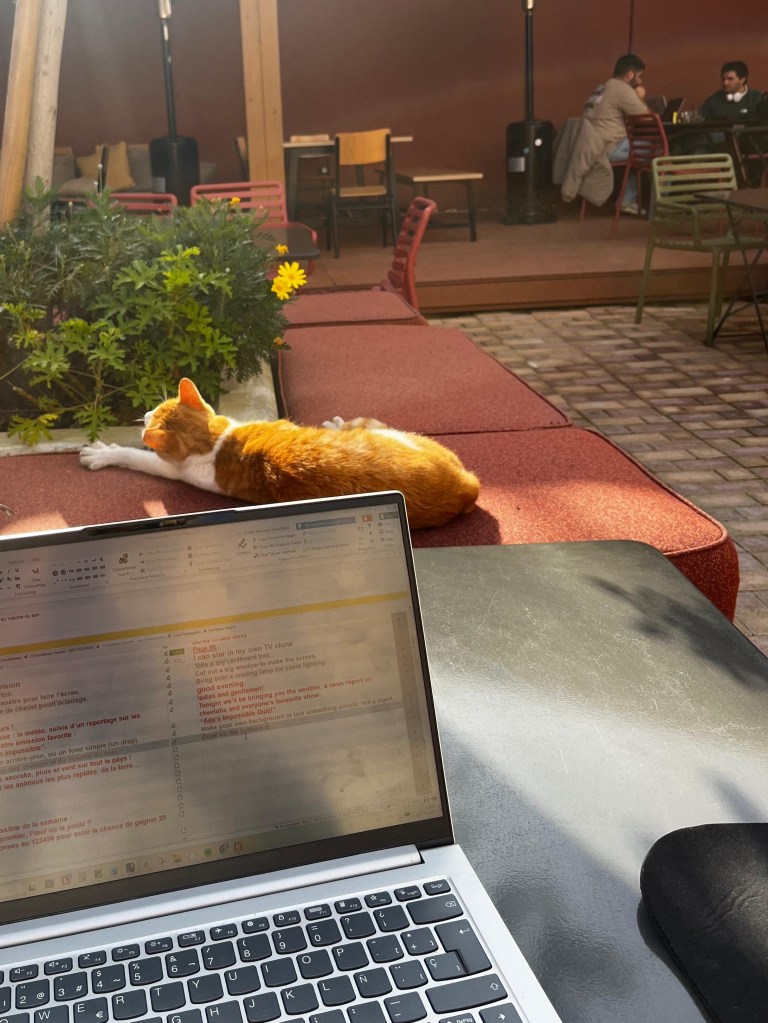
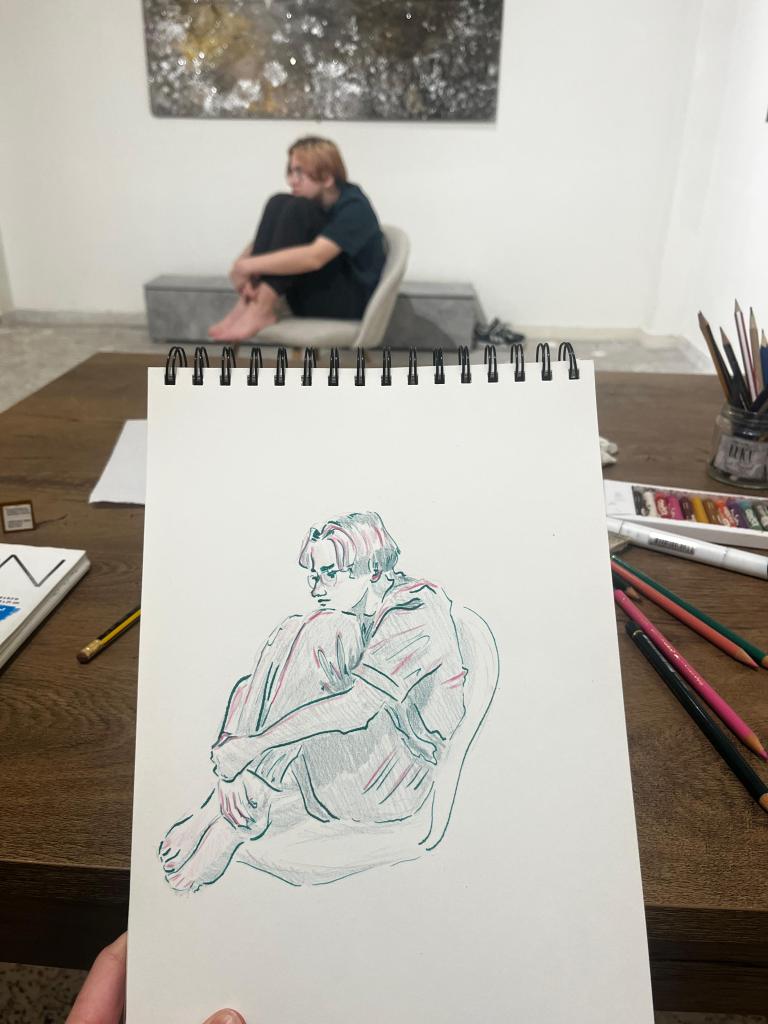
So far, I’ve been following the same approach as I did for French and Spanish: listening to Greek music extensively, reading graphic novels, making easy small talk with as many people I can, and joining local sketching and bouldering groups. The biggest lesson I’ve learned so far about modern Greek is its social dynamic. Fluency here isn’t so much about not making mistakes, it’s about speed. Greek culture is all about the parea, the big group of friends or family; if you can cut in and pull off a perfectly timed comment or joke without tripping over your cases, then that’s a proper level-up.
For now, my first goal is to pass the B2 level exam. Further down the line, I would like to take on C1 and start completing my first Greek to English translation projects. Living in Athens, I see how much amazing literature and insights into heritage and folklore are being published in Greek. One day, I would love to help to share modern Greek discourse and perspectives with English speaking audiences.
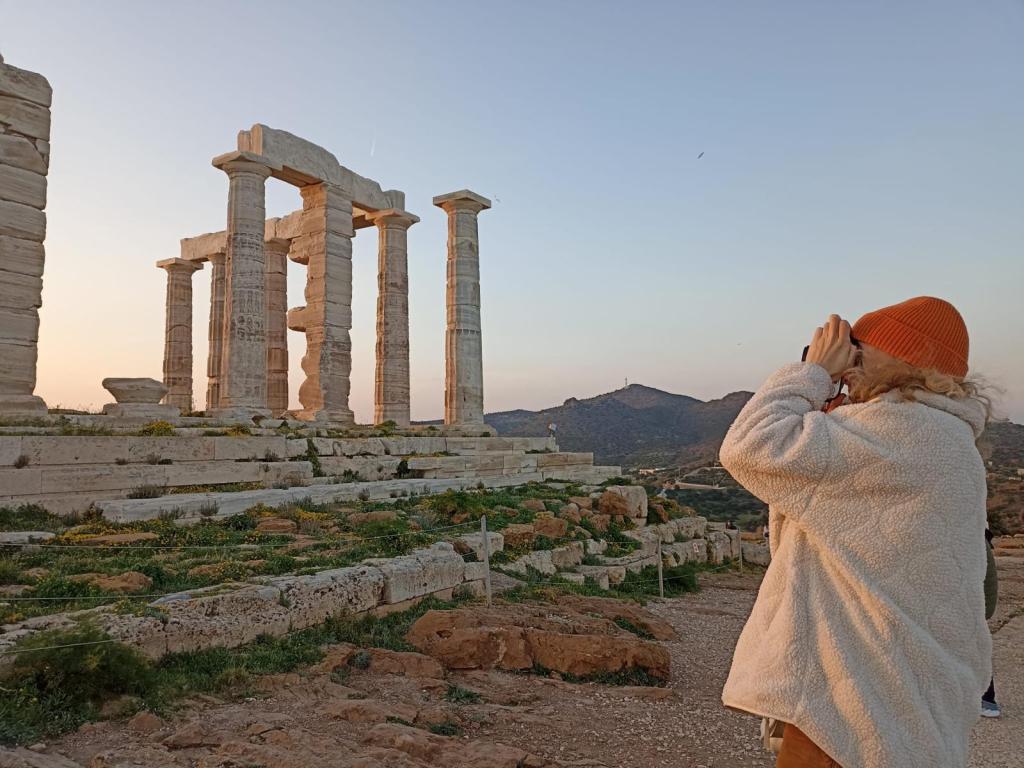
At the temple of Poseidon in Sounio

Gaining experience in public service interpreting for asylum seekers

Moving to Athens meant putting my Lyon-based interpreting work on hold and tackling a new market. Not yet comfortable enough in my Greek to take on commercial work in the city, I decided volunteering would be the best possible path to put my French skills to good use in a field where demand is high. Since October last year, I have been working on a weekly basis as a volunteer French/English interpreter for the NGO European Lawyers in Lesvos. In a nutshell, I provide interpreting during asylum interview prep meetings, mock interviews led by the association’s lawyers in the aim of preparing asylum seekers for their official asylum interview. After completing a training session provided by excellent interpreter and researcher Farah Shilandari, I began taking on my first meetings. So far, this work has exposed me to the varieties of French spoken throughout Francophone Africa, in countries such as Guinea, Cameroon, the Democratic Republic of Congo, Senegal, and the Central African Republic.

Coming into this new kind of work, I was a little apprehensive at first about the emotional implications. Remaining neutral, professional yet still emotionally engaged requires quite a strong will, as the topics delt with are very sensitive. Losing composure while in the role of interpreter can infringe upon the translation process and transparency of communication, and this can become a bit of a juggling act between empathy and professionalism. However, coming from a family of social workers, nurses and mental health professionals, the role felt natural to me, and allowed me to turn my own principles and beliefs regarding migration and human rights into action.

So far, I have been grateful for the opportunity to use my French skills in such a meaningful way, and to help provide support for migrants in an increasingly cruel and hostile immigration landscape. Every session contributes to my own geopolitical and cultural awareness, informing me not only in my interpreting work but also in my translation work. I am also struck by the incredible strength of the association’s lawyers, most of whom are women. The challenges, however, of interpreting between three people, none of whom are speaking their native tongue, are substantial, and I am slowly acquiring methodologies to keep misunderstandings at a minimum.

On the horizon for 2026

Despite the ongoing shifts in the now AI-saturated market affected by financial instability and general cuts to arts funding, this year has been, and is still looking to be, rich in projects and culturo-linguistic adventures!  I recently wrapped up a long-overdue trip to visit family in the US, my work for the Impressionnismes platform will continue into the summer, and I’m continuing my fashion copywriting and tourism translations on the side. It will also be great to see some of my book translations go to print in the next few months. I am expecting to see more editorial and public sector projects coming my way throughout the year, and – fingers crossed – an exhibition or two! During my down time I will continue sketching, exploring, and practicing my Greek conjugation on the chatty shopkeepers of Kipseli.
What am I reading? Les furtifs by Alain Damasio and the graphic novel Mangas by Penelope Delta, illustrated by Konstantinos Sklavenitis

What am I listening to? BBCs “In Our Time”, an Arte series on Bertrand Belin, and the LIFO Άκου την επιστήμη podcast

What am I working to? My supplier of good vibes for over 10 years now: Fip Radio. Hier, aujourd’hui et à jamais !

The hidden poetry of museum translations

From a young age, I’ve always preferred working behind the scenes to centre stage. I left school with a strong ambition to work in costume and set design for film and theatre, but after finding my path in languages and history of art, I realised that there were so many ways to recreate that backstage excitement. Museum translation definitely scratches that itch, and it has come to be one of my favourite disciplines as a creative professional translator. In this article, I take a look at some of the secrets and pitfalls that can make or break a multi-lingual exhibition, with a particular focus on French to English translations.

Keeping the voice evocative but accessible

Nobody can deny the beauty of the French language. Those who truly master it can push it to its elegant, playful and more abstract limits. This linguistic prowess can make for some beautiful texts, particularly in a museum context, but sometimes as translators we find the need to latch on to something more tangible in order to find the right flow in our translation. English does tend to be punchier and more direct, but this does not mean that any elegance or poetry needs to be lost in the final text.

The main challenge when translating exhibition labels, wall text or brochures from French into English is to grasp the meaning, maintain the style, and transform it into something equally evocative for an English reader. But there is one caveat – exhibition texts are displayed side by side, leaving any translation “exposed”. Delve too voraciously into transcreation, and you may fall prey to the critical eye of any bilingual visitors. Stay too close to the text, however, and you risk producing a rather waffly translation that readers can’t identify with. Museum visitors seek emotional engagement and will rarely have the patience to unravel tangled prose in order to seek meaning. A convoluted text can also be quite alienating for the visitor, leaving them feeling not “smart enough” and with a sense of imposter syndrome.

My solution? Making sure I fully understand what the source is trying to convey and formulating my translation after carefully examining the artwork in question. By forming my own emotional response as a viewer-translator, I can provide a natural sounding translation that is more likely to engage the museum visitor.

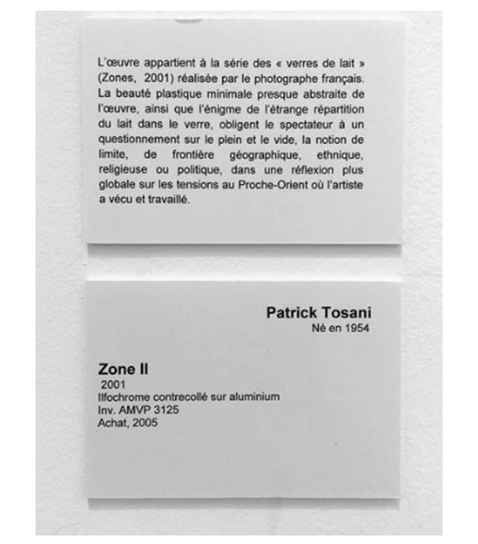
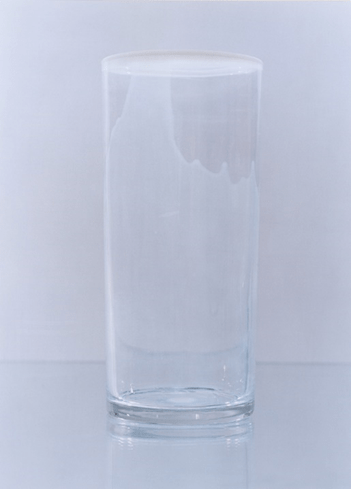
Sometimes, however, we must translate texts on works that do not resonate with us. Let’s look at how we would deal with an extreme case – a simple “glass of milk”, on display at the Palais de Tokyo in Paris:

Here, we may well look at the glass of milk and struggle to connect with it on an emotional level, but duty calls – we must find a way to make our translation as accessible as possible for the museum-goer. The rest is up to them.

I would translate this label as follows:

“This work is part of the French photographer’s “glasses of milk” series (Zones, 2001). The minimalist, almost abstract, plastic beauty of the piece, along with the mysterious positioning of the milk in the glass, forces the viewer to question the notions of negative and positive space, boundaries, and geographical, ethnic, religious and political divides, beckoning a broader reflection on the conflicts facing the Middle-East, where the artist lived and worked.”

Sometimes as translators we must remember that we are not the writer or the artist, and that our role is to simply keep things as clear as possible and faithful to the original, while using language to our advantage to spark an intellectual or emotional response in the viewer.

Telling a story: leaning into the literary

Museum writers are storytellers, and by extension translators must also adopt this role. It is my view that vivid images, sensorial language and clear structure allow for the most engaging explanatory texts in a museum context. Whenever I am sent museum labels or wall texts to translate, I see it as a great opportunity to think creatively and find the right words to capture the viewer’s imagination whilst remaining faithful to the original text.

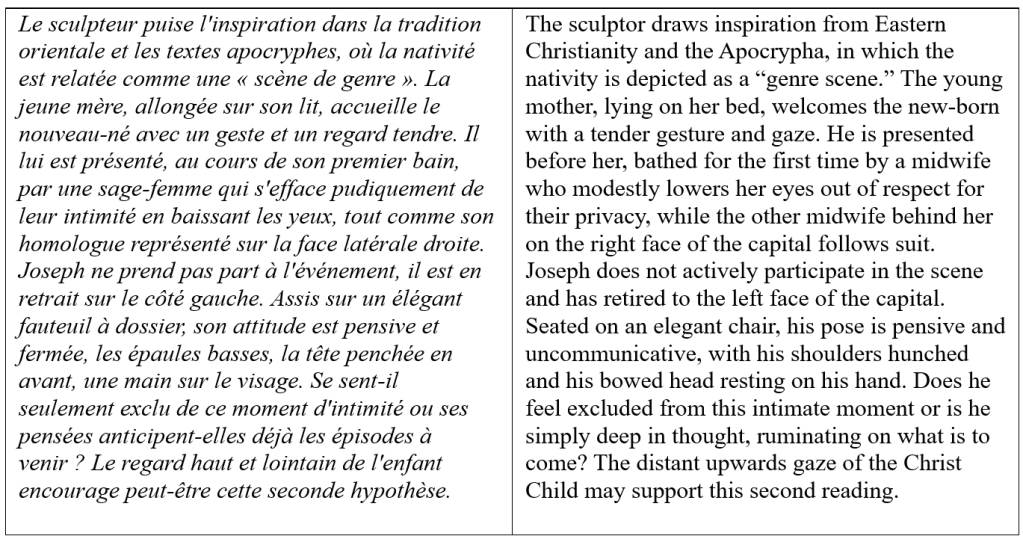
Take this example from my translation of the brochure offered to visitors of Autun Cathedral, which provides explanations of the cathedral’s famous column capitals. As many include complex religious symbols and details barely visible to the naked eye, I aimed for as clear a translation as possible to reflect the source while engaging the listener:

“Nativity” column capital at Autun Cathedral

The risks of cutting corners and the AI revolution

Art is the very visual representation of the human experience. It therefore seems logical that those who write about it should be human… Right?

In the current financial climate, cultural projects such as exhibitions run on a tight budget, with little left over to pay for professional translation services. The solution seems simple – to use AI for all exhibition text translations and save a buck or two.

The main issue with this is that AI does not yet understand nuance when it comes to linking a piece of art to its greater emotional and historical context, particularly when this extends beyond a mere recounting of Wikipedia facts. Concepts such as brushstrokes, shade, and iconography are delicate and require specialised knowledge. When dealing with French to English translations, a failure to recognise that “vide” does not always mean “empty”, “plastique” does not always mean plastic, and “attitude” does not always mean “attitude” can result in clunky, disastrous translations that leave the viewer feeling confused, distancing them from the artwork. These subtleties often go unnoticed by a non-native speaker, but once that text is on the wall, the museum’s very credibility is at risk.

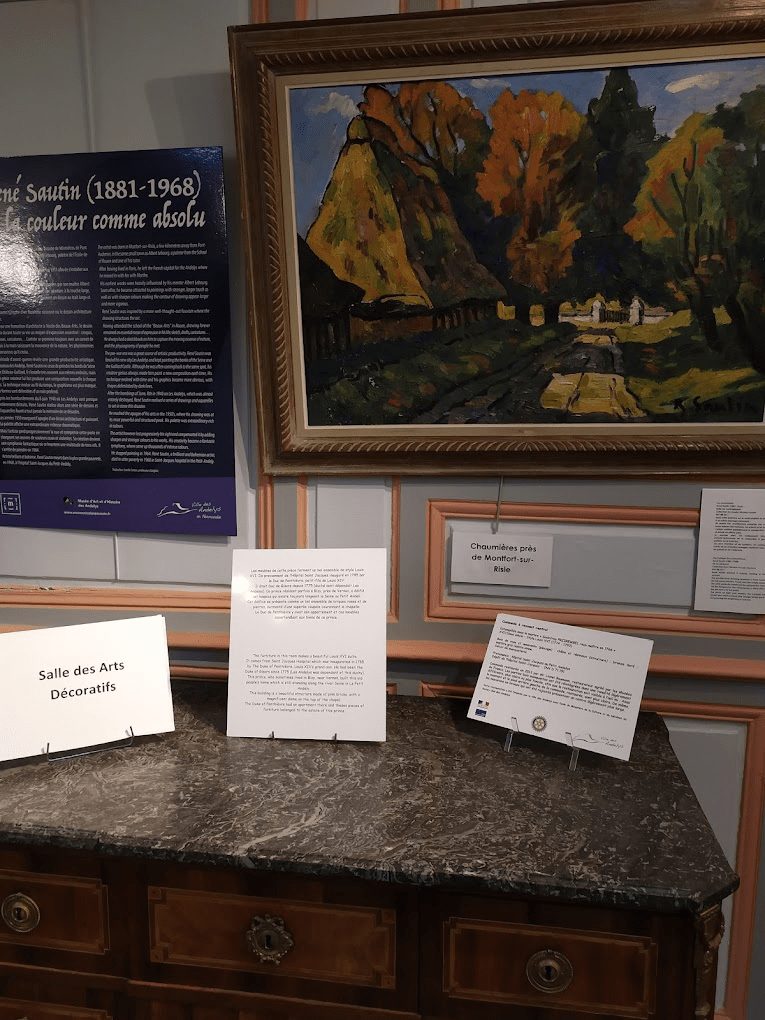
Some nice human translations in their natural environment: one of my past translations projects on display at the Musée Nicolas Poussin

For art’s sake…

Take it from a totally unbiased bystander: the best thing an art museum can do when trying to retain and attract non-native speakers is to call on the experience of a translator specialising in history of art. Over the years, I have worked on a wide range of translations from both French and Spanish into English specially tailored for a museum context. Drawing on my love of art, my knowledge of art history, and my language skills, providing translations of this type always fills me with joy and a great sense of purpose.


Are you a translator working in the field of museum and art translation or just an art lover? Add me on LinkedIn so we can share our experiences and exhibition recommendations!

Are you a company or individual looking for creative translation services from French or Spanish into English? Contact me for a quote or get in touch to find out more about the freelance translation services I offer.

Life as a freelance translator in Lyon

My move to France has been a long time coming. After finishing my studies, starting my career in Spain, and the Covid pandemic, there seemed to be no time like the present to take the leap and rediscover the culture that sparked my whole interest in languages and translation in the first place. Lyon was a perfect choice – it was big enough to offer plenty of culture and work opportunities, but small enough not to feel overwhelming. Two of my friends from my master’s were already based in the city, also working in the translation industry. Seeing their sunny apéro photos by the Saone, it was hard to resist the temptation of warmer climes.

First steps as a “micro-entrepreneur”

In late May of 2022, I packed a bag of summer clothes, my postcard collection, four books, and took the flight, self-employed visa in hand. Arriving in Lyon in the summer was a great introduction and allowed me to get to know the different neighbourhoods before the chaos of la rentrée. One of the first things I did after arriving was to join a coworking space I’d found out about online – l’Atelier des Médias – an association collectively run by people working in media. After almost four years of working from home and based on the experiences of other freelancers working in shared offices, I knew it would be the right decision.

As somewhat of an extrovert for a translator, I find that working in a shared space and bouncing ideas off others greatly improves and enriches my work. So, without hesitation, I took a fixed desk at l’ADM. Now, five months later, the coworking space has proved to be an immense source of productivity and fun and has really given a much-needed boost to my French speaking skills. Also, seeing the same friendly faces every day in the office or at lunch is a nice routine and it makes the city feel that little more like home.

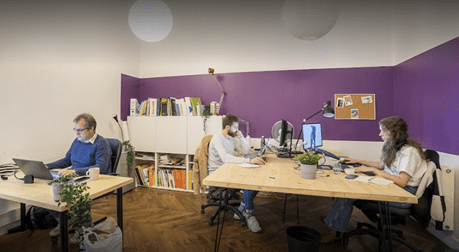
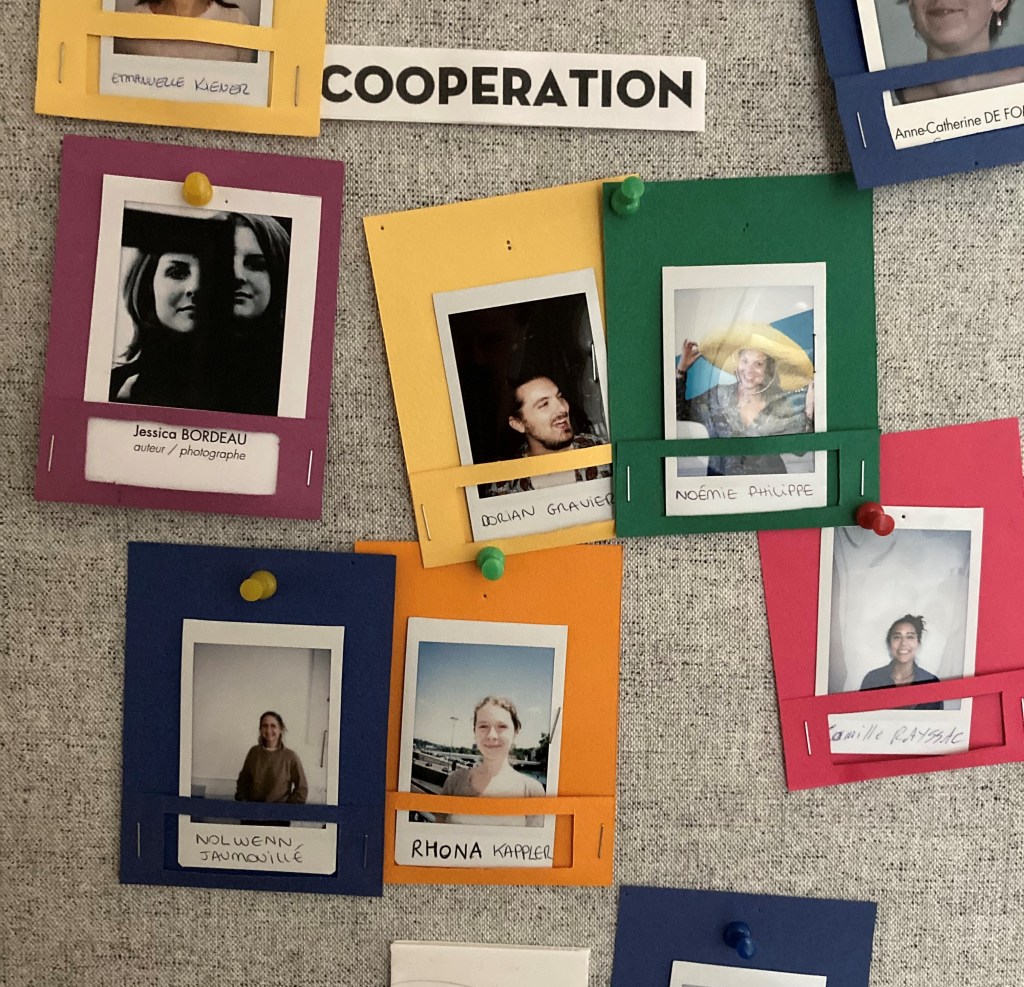
Me and the rest of the Co’op team at l’ADM

New city, new projects, forty-degree heat

In terms of projects, this year had got off to a promising start with my translation of the brochure Lisez-vous le belge? – a national campaign to promote Belgian literature. It was a challenging and rewarding project that really pushed me to adapt to different writing styles, setting the tone for my intention for the rest of the year. My aim in moving to France was not only to improve my language skills and cultural awareness but also to connect with new clients in the literary, artistic, tourism and heritage fields.

As I started to find my feet in this new market, exciting new projects naturally started coming in, and the new office space helped me to give them the time and attention they deserved. Handling this workload during the heatwave was challenging, with long hours and no air conditioning, but the dips in the Rhône outdoor swimming pool and cool Sunday evening picnics on Île Barbe made it all worth it.

Nothing says summer in Lyon like eating melon
off a magazine in the park

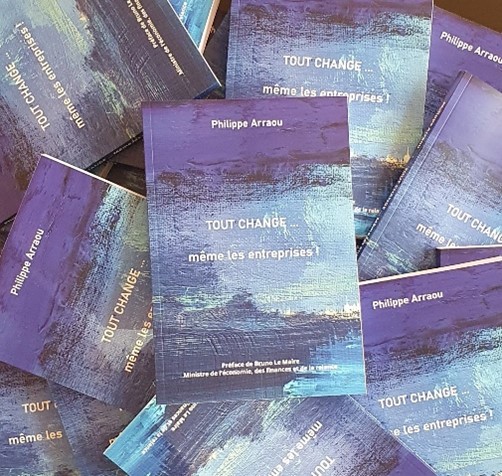
A large part of my summer was spent on a non-fiction translation project, to write the English version of Everything Changes – Even Businesses, the new book by Philippe Arraou, President of the French Association of Chartered Accountants. The book deals primarily with the subject of the digital transformation and changing work models and was an interesting challenge, requiring me to apply my love of creative prose to a more technical subject.

C’est la rentrée!

After the summer holidays, I experienced the famous rentrée rush. New projects came flooding in, including many new creative, literary and editorial opportunities. Translating Del Perrier’s new children’s book, Danse, mon amour, was a real joy and brought back fond memories of working on samples of illustrated novels for the SEA.

Autumn came around, the mosquitos stopped biting, and the cheesemongers started telling me apologetically that it was no longer “feta season” and that “raclette time” was upon us. I began to work more regularly on editorial projects in French and Spanish, thanks to a partnership with a young agency based in Valencia. As a child, I remember my obsession with Vogue and those full-page, conceptual fashion shoots I would cut out and blu-tack to my wall. Now, I actually had the chance to work with this agency on projects for the likes of Vogue, World of Interiors, and GQ! After a long wait, I was finally able to get my hands on the edited, physical version of my work for one of the magazines, immediately stopping to pour over the pages at a little café terrace near Place Saint-Jean. Seeing your work in print is a rare treat for any translator, credited or not, and this moment was a real source of motivation for me, reaffirming my sense of purpose in this new city.

Interpreting in a new context

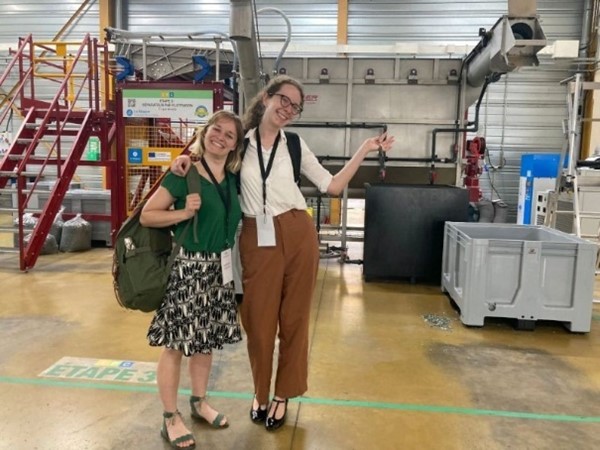
These last five months have also been an opportunity for me to do my first interpreting jobs in France! Having worked previously as an interpreter in Spain and the UK, fulfilling the same role in a new country was a daunting but exciting prospect. I was invited to work in tandem with seasoned interpreter and fellow coworker Chloé Delhom for a conference held by plastic packaging manufacturer Texen. It was a full day of simultaneous interpreting, with a wide variety of both technical and corporate vocabulary to master. We managed to rise to the occasion and received positive feedback from the English-speaking guests, who were grateful for our presence during the event, which was held entirely in French.

More recently, I provided liaison interpreting services for MSI Services, a production line maintenance company, for an important meeting with their client Rheon, a Japanese manufacturer of food processing machinery. This project and the Texen conference were a much-appreciated chance for me to finally apply my training in a French context and enjoy the fast-paced, more socially oriented environment these projects provide. I’m keeping my fingers crossed for more opportunities like this in the months to come!

Me and Chloé at the Texen recycling plant

So, what’s next?

Ultimately, my ambition for the next few years is to be able to translate more published works and produce wall text translations for leading museums in France. Translating texts on themes such as art, nature, and music has an expressive quality that I find incredibly satisfying. I also hope to channel this creativity into more interpreting projects, as this is just as rich a way of helping people to cross cultural borders.

Things are looking promising in Lyon, and it is a real breath of fresh air compared to Edinburgh’s much smaller translation scene. Over the coming months, my goals are to expand my client base, discover more of the city’s art scene, continue bouldering and hiking with friends in my spare time, travel around France and, who knows, maybe stop eating so many pains au chocolat?